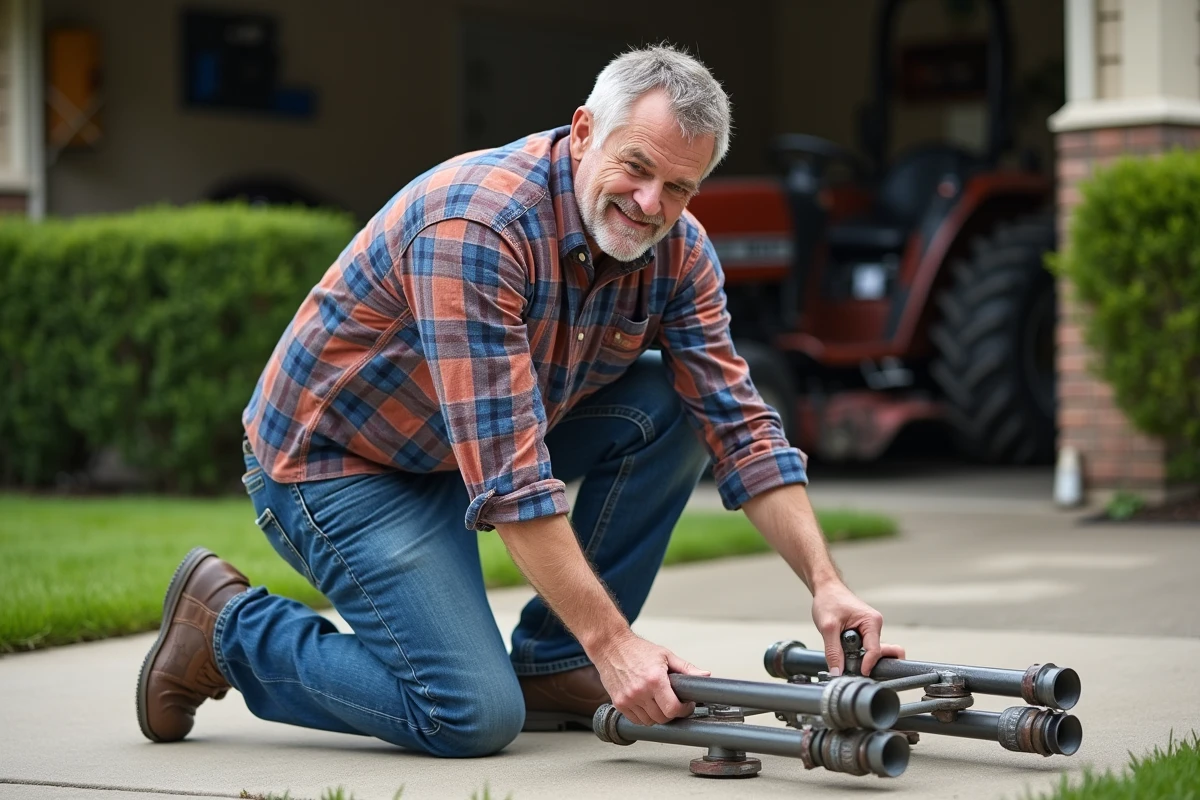
An improvised lifting device exposes one to often underestimated crushing risks. The majority of accidents during the maintenance of riding mowers occur due to a lack of suitable tools or the use of precarious solutions. The absence of a stable device hinders maintenance and increases danger, while simple and reliable alternatives exist.
Common materials are sufficient to design a mower lift that meets safety requirements. A few principles of mechanics and methodical assembly allow for a robust tool that limits risky handling and promotes regular interventions.
Why making your own mower lift can change everything for maintenance
Adopting a homemade mower lift opens the door to hassle-free maintenance and redefines your relationship with your machine. Accessing hidden parts of the chassis, the blade housing, or the transmission is no longer a daunting task: handling becomes simple, quick, and safe. Each operation, whether it’s changing the oil, replacing the spark plug, or checking the filter, becomes more efficient thanks to a stable custom-made tool. No more tension in the face of the weight of the riding mower: the intervention is no longer a matter of luck.
Maintaining a riding mower requires regular and careful monitoring: cleaning the blades, checking the engine, adjusting the belts, or changing the oil. A sturdy mower lift puts every task within reach while protecting the structure of the device. Installing this type of tool, often absent from garages, radically changes the approach: the longevity of the equipment is enhanced, actions become more precise, and maintenance stops being a dreaded chore.
Here are the main tasks that fully benefit from a homemade tool:
- Blade replacement made smooth thanks to completely clear access
- Checking for possible oil leaks without tedious disassemblies
- Targeted cleaning under the cutting deck, without the risks of tipping
Building with your own hands is neither complicated nor expensive. Repurposing materials, skill, and strict organization are more than enough. The real benefit goes beyond savings: the assurance of a lawn mower that is quick to check and well-maintained in the long term immediately reflects on the condition of the lawn and peace of mind.
What materials and tips to prioritize for a reliable and safe construction?
To build a reliable riding mower lift, sturdiness is key. Using steel for the frame, whether square or rectangular, ensures stability and high resistance over time. Repurposing metal bars from an old gate or a workshop shelf reduces costs without sacrificing strength. A hydraulic jack, salvaged from a car jack or agricultural tool, provides the necessary power: choose a capacity greater than the weight of the tractor to avoid any deformation or breakage.
Safety allows for no compromise. Install a mechanical locking device, such as a through pin in the lifting arm or a thick and reliable wedge: this ensures that nothing will fall, even if the hydraulic system fails. Inspect the welds, add reinforcements at stressed points, and do not overlook any weaknesses. Under the supports placed on the ground, attach non-slip protections: this small detail prevents many unpleasant surprises during maneuvers.
To ensure a successful build, plan for a few additional tools. These may include:
- A wire brush to prepare surfaces before welding
- A specially designed spark plug wrench to simplify maintenance once the tractor is lifted
- A level to ensure a perfectly adjusted frame
Examine each assembly, check the condition of the parts after assembly, and test stability by gradually increasing the load. This rigor transforms a technical gesture into a guarantee for both the equipment and the user.
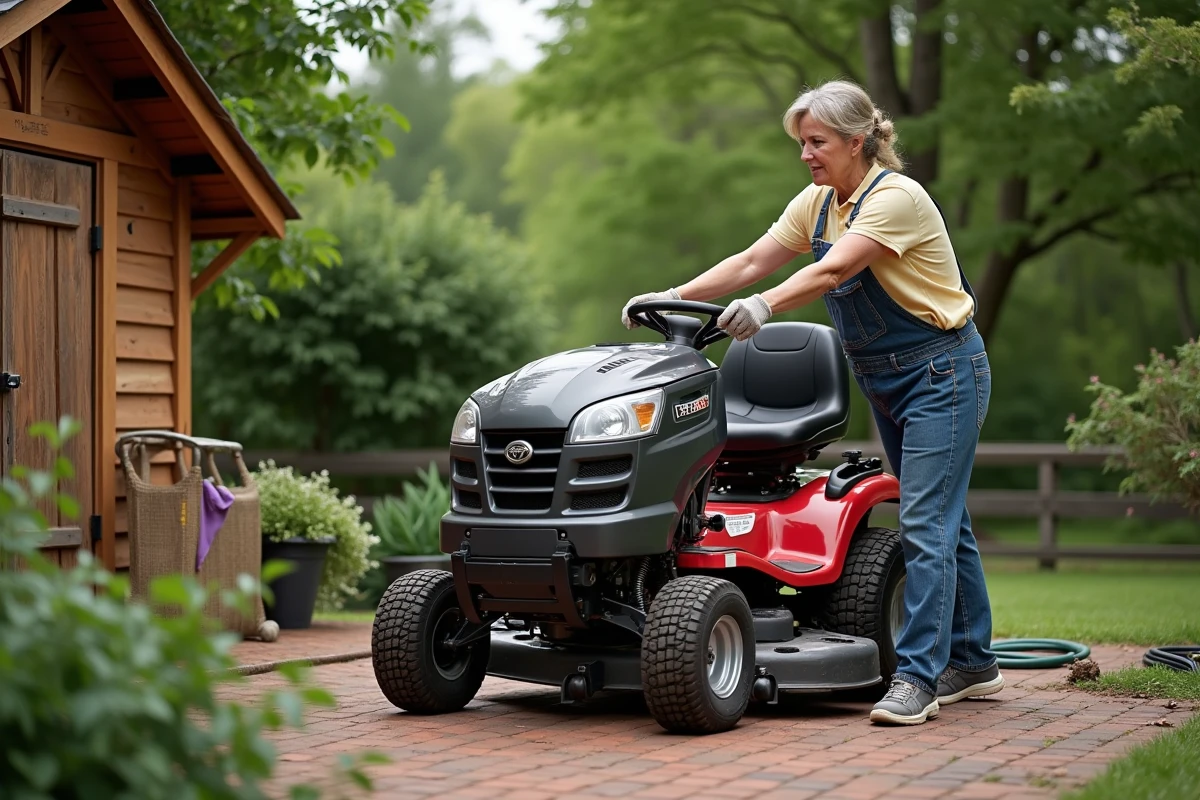
Focus on the key steps to easily assemble your homemade mower lift safely
The first reflex to adopt: drain the fuel tank first to prevent any incidents. Next, prepare the frame: assemble your steel bars, check the angles with a level, and ensure clean welds. The hydraulic jack must be installed straight, ensuring balanced lifting without surprises.
Then come the lifting supports: position them to fit the shape of the chassis and apply non-slip protections on each support point. Also, install a reliable locking system, such as a pin or metal wedge, to secure the device in the raised position.
Before the first use, check all fastenings, test the jack first empty and then gradually loaded. It’s also the time to check the overall condition: blades, filter, engine, spark plug. Always have a wire brush on hand to remove grass residues or sticky grease. Do not skimp on protections: gloves, goggles, and a clean space around the machine, every detail is worth its weight in peace of mind.
Once the tool is assembled, maintenance takes on a whole new dimension. No more hesitations, it’s time for regularity and reliability: your riding mower will now be ready to face season after season, robustly supported in all its adjustments.