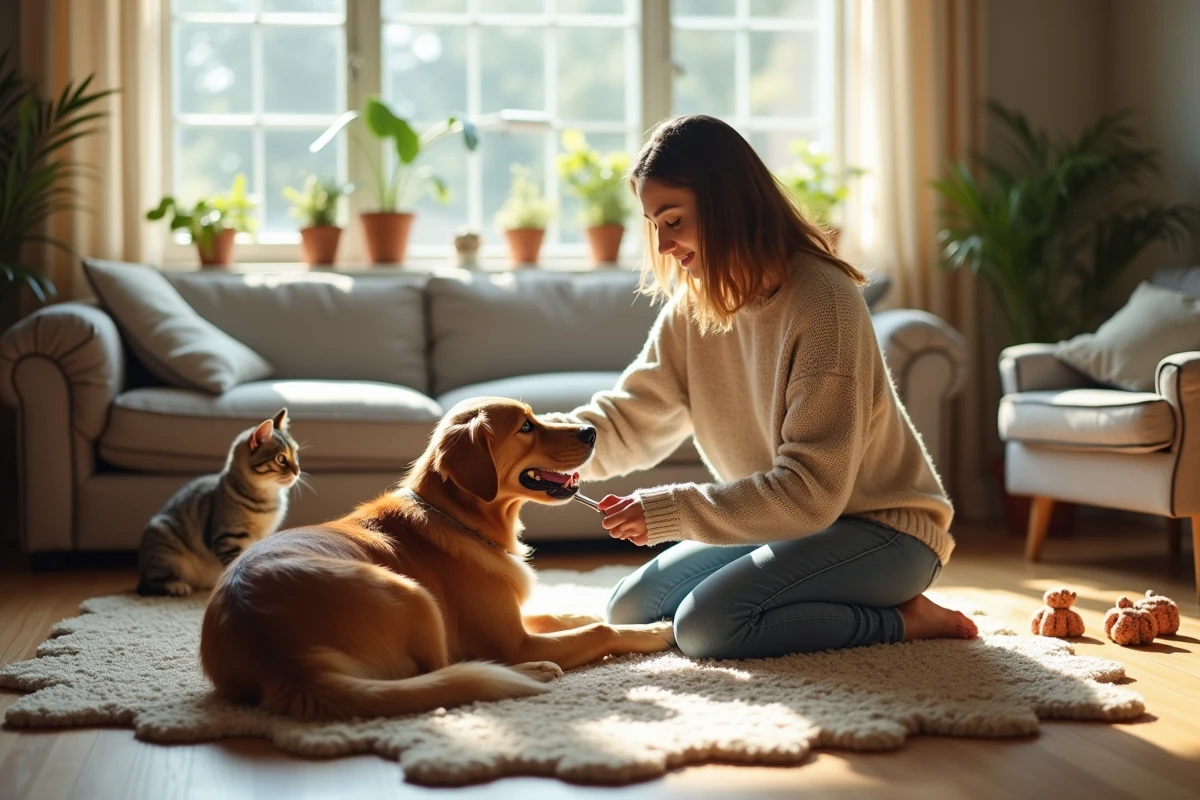
A dog does not read a cat like another feline: a wagging tail, a posture, nothing has the same meaning. Sharing bowls, water points, or litter boxes quickly becomes a source of tension if the rules are not clear. Even a calm dog retains a predatory instinct that the cat perceives, as it defends its territory, on alert, ready to react to the slightest signal.
In some households, dogs and cats ignore each other for years; elsewhere, they invest in their shared routine within weeks through patience. What makes the difference? Flawless organization and genuine attention to the needs of each species.
Dog and cat under the same roof: understanding the basics of harmonious cohabitation
Putting a dog and a cat together is not a magic trick. It takes time, steps, and a real willingness to adapt. Socialization from a young age, recognition and protection of each other’s territory, and careful observation of postures: nothing should be left to chance. The cat, a fierce guardian of its space, likes to isolate itself up high, away from disturbances. The dog, more demonstrative, seeks contact and can sometimes be abrupt, without bad intentions.
During the first meeting, prioritize a neutral location, control the distance. A curious and cautious kitten does not react like an adult cat; a playful puppy may bump into things without understanding. To ensure everyone finds their place, consider dedicated refuges: a quiet doghouse for the dog, a room or an inaccessible perch for the cat.
Special attention must be given to the layout of the space. To avoid conflicts, here’s how to separate resources:
- bowls placed at a distance
- litter box out of reach for the dog
- distinct resting areas
Never force contact: observe behaviors and adapt. A cat with a rounded back, a dog with a low tail, these are signals not to be ignored. Consistency in routines, patience, and gradual adjustment of interactions create the conditions for lasting balance.
For those who want to delve deeper, the site chiensetchats.net offers a wealth of information on cohabitation and reading animal behaviors. It features testimonials and advice that emphasize the importance of a stimulating environment and daily vigilance to ensure the tranquility of the dog-cat duo.
What challenges do owners really face and how to respond daily?
Living with a dog and a cat under the same roof also means facing sometimes tense situations. Rivalries over food, a litter box invaded, or toys monopolized often arise. The dog, driven by curiosity (and sometimes greed), ventures into the litter box; the cat, on the other hand, avoids noisy or overly crowded places. If the space and rhythm are not adapted, stress quickly escalates, leading to fleeing or aggressive behaviors.
To help everyone maintain their bearings, it is essential to organize their territory. Provide the cat with high areas or a closed room, inaccessible to the dog. Distribute water points and multiply resting corners. Some owners invest in scratching posts to channel the cat’s energy, while others choose sturdy toys to keep the dog occupied.
Here are some concrete arrangements that facilitate shared living:
- Place the cat’s bowl out of the dog’s reach
- Install a discreet and protected litter box
- Define separate resting spaces, respected by all
If tension persists, consulting a feline behaviorist or a dog trainer can make a difference. These experts analyze behaviors and propose solutions tailored to each household. Observing, spotting changes in behavior, anticipating signs of discomfort: the owner’s role never ends.
Give each animal true security and the freedom to manage its moments: let the cat retreat when it feels the need, respect the dog’s calm during mealtimes. It is the small daily adjustments, the constant attention, that ensure the success of long-term dog-cat cohabitation.
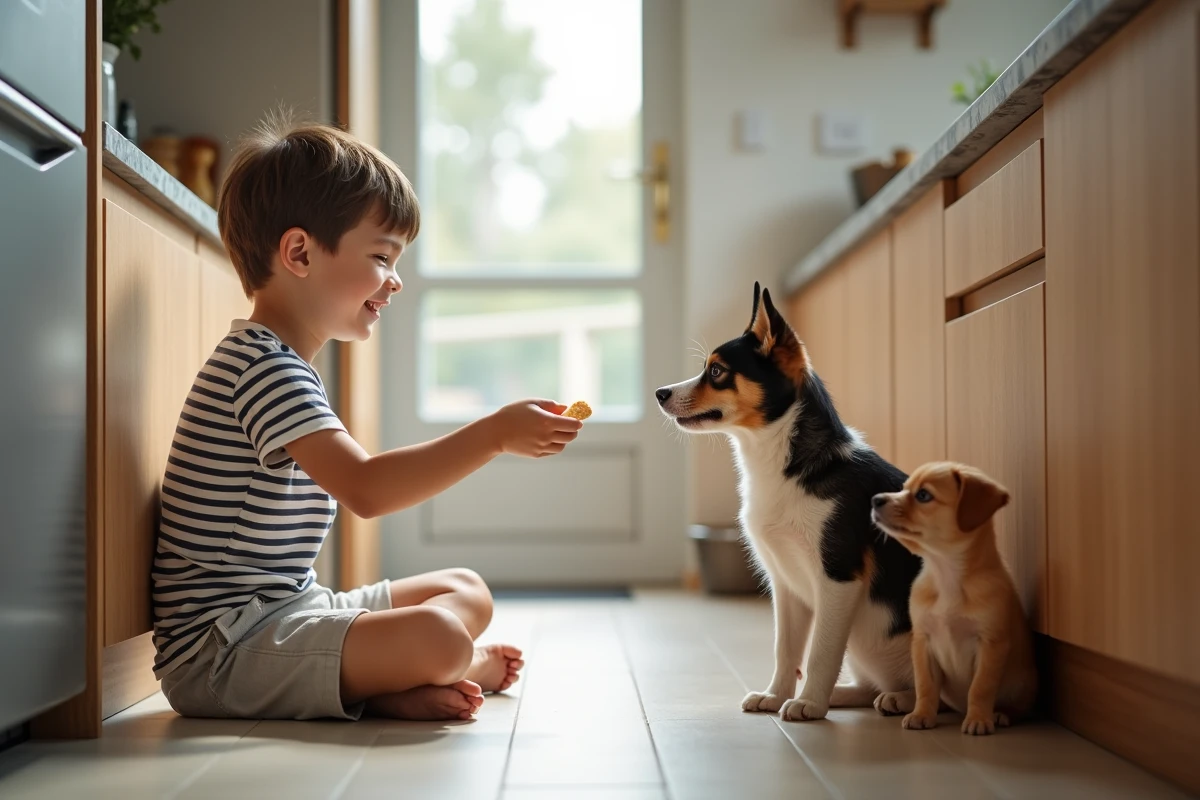
Concrete tips to strengthen the bond between your pets at home
Everything opposes dogs and cats, but life under the same roof offers beautiful surprises, as long as one makes the effort. To establish a true bond, it is essential to focus on consistency, patience, and arrangements designed for them. Supervised play sessions play a key role here: interactive toys that engage the dog’s sense of smell and the cat’s hunting instinct redirect energy towards sharing rather than rivalry.
Allow each to choose to isolate themselves: a cozy cushion for the dog, a shelf or a cat tree for the other. Plan distinct spaces for meals and the litter box to avoid any intrusion. The stability of the routine and respect for habits reassure and limit tensions. Distribute some treats in the presence of both animals: this way, the presence of the other becomes synonymous with a pleasant moment.
To maintain this dynamic, here’s what works best:
- Encourage calm and respectful behaviors
- Renew play routes to stimulate curiosity
- Regularly change toys to maintain interest
Learn to read signals: a twitching tail, averted gaze, ears back… These are all clues that must be respected. Do not force contact: it is the animal that decides. Encourage habituation to the smell of the other by occasionally exchanging blankets or favorite toys. Finally, maintain calm, stable communication to set the tone. This is where the sought-after harmony is born over time.