
The cost of a visa depends on the destination country, the type of stay, and the nationality of the applicant. Some visas cost only a few dozen euros, while others can reach several hundred dollars. The country with the most expensive visa varies according to sources, but a few destinations consistently top the pricing rankings.
Visa fees and additional costs: two distinct pricing realities
Comparing the most expensive visas in the world requires distinguishing between two components. The first is the consular fee set by the destination state, which is the official amount required by the embassy or consulate. The second includes additional fees: processing the application by an outsourced center, priority processing options, mandatory travel insurance, passport delivery.
This distinction radically changes the interpretation of prices. A visa with a moderate consular fee can become one of the most expensive once agency fees are added. Players like Visania document this reality: an urgent application can increase the bill by about 75 to over 100 euros, just for the emergency option, not counting other logistical supplements.
To discover the price of visas by country and compare official rates, it is essential to always check whether the announced amount includes these intermediary fees.
Turkmenistan and Nigeria visas: the highest consular fees
Among the frequently mentioned destinations, Turkmenistan ranks at the top of the most expensive visas in the world for foreign travelers. This Central Asian country imposes consular fees significantly higher than the international average, making simple tourist access particularly costly.

Nigeria also ranks among the most expensive destinations, with a visa costing up to 250 US dollars. This pricing level places these two countries far ahead of most traditional destinations.
Several factors explain these discrepancies:
- The restrictive immigration policy of certain states, which use the visa price as a deliberate filter for entry into the territory.
- The low volume of tourist applications, which does not allow for the amortization of administrative costs over a large number of files.
- Limited bilateral agreements, unlike countries that are members of large regional blocs that negotiate reciprocal reductions.
The visa fee often reflects a political strategy as much as an economic logic. A country looking to develop its tourism lowers its fees, while a country that strictly controls its migration flows maintains high pricing barriers.
Cost of the Schengen visa after the 2024 reform
The Community Code on Visas has been updated with a direct impact on fees. Since June 11, 2024, the European Visa Center applies a standard fee of 90 euros for type A (airport transit) and C (short stay of up to 90 days) visas. Children aged 6 to 12 pay 45 euros, and those under 6 are exempt.
For long stays (type D visa, beyond 90 consecutive days), the fee rises to 180 euros, plus a processing fee. This amount remains lower than the visas for Turkmenistan or Nigeria, but it represents an increase compared to previous rates.
Reductions exist for certain nationalities thanks to facilitation agreements. Some nationals pay only 35 euros for a type A or C visa. Family members of a European Union citizen benefit from complete exemption, provided they prove the family relationship with a civil status document.
Opposite trend: countries eliminating their tourist visa fees
While some states maintain high rates, others are taking the opposite direction. Since May 25, 2026, Sri Lanka has eliminated all short-stay visa fees for tourists from over 40 countries, including France, the United Kingdom, the United States, China, and most Western European countries. This exemption covers stays of up to 30 days.
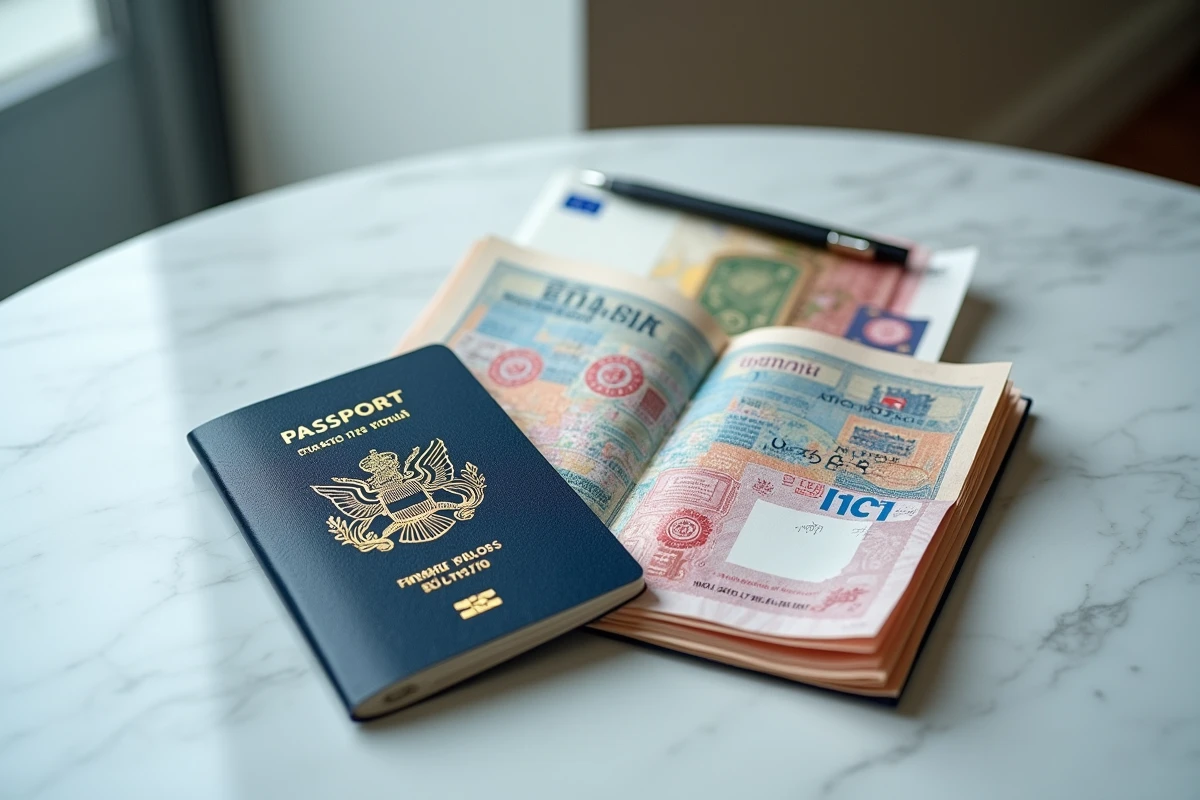
This strategy aims to revive the tourism industry by reducing administrative and financial barriers to entry. The contrast with countries that charge several hundred dollars for a tourist visa illustrates how the price of a visa is a lever of tourism policy as much as an administrative formality.
For a traveler preparing for a world tour or a multi-destination itinerary, these disparities have a concrete budgetary impact. The cumulative cost of visas can represent a significant portion of the total budget, especially if the itinerary includes high-priced destinations.
Most expensive visa: what the face value doesn’t reveal
The ranking of the most expensive visas depends on the scope considered. In pure consular fees, Turkmenistan and Nigeria dominate the ranking. In total cost for the traveler (agency fees, mandatory insurance, emergency option), some Schengen visas or visas for India can reach comparable amounts.
A visa for India, for example, offers several validity levels that alter the final price:
- Validity of 3 months with 2 entries: an additional 99 euros compared to the base rate.
- Validity of 1 year with multiple entries: an additional 148 euros.
- Validity of 5 years with multiple entries: an additional 247 euros.
When adjusted for the number of entries or the duration of validity, a multi-entry visa over 5 years can be more advantageous than a short-stay visa renewed for each trip. The true cost of a visa is calculated based on usage, not face value.
The country with the most expensive visa is therefore not always the one that displays the highest amount on its embassy’s pricing grid. Comparing total fees, validity duration, and the number of permitted entries remains the only reliable method to assess the actual budget for an entry formalism.