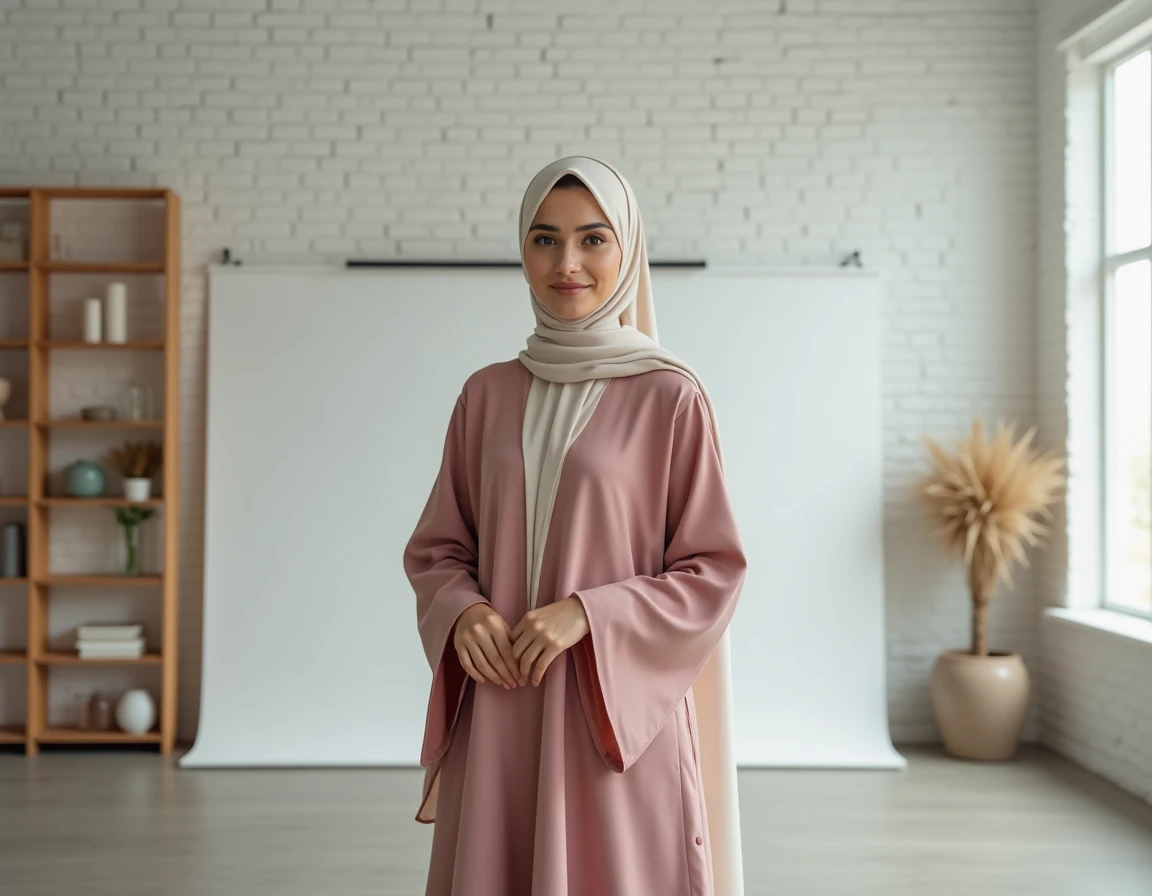
A woman wearing a hijab receives an offer to pose in an abaya at a women’s fashion show. She hesitates, seeks religious opinions, and encounters contradictory responses. This situation, increasingly common with the rise of modest fashion, deserves a concrete discussion of the Islamic debate and the real professional options that exist today.
Tabarruj and Image Dissemination: The Two Legal Blockages in Islamic Law
Most discussions about modeling in Islam revolve around two concepts. The first, tabarruj, refers to the intentional display of beauty in front of non-mahram individuals. The second concerns the massive and uncontrollable dissemination of images, particularly on social media.
Several well-followed English-speaking preachers, such as Mufti Menk and Omar Suleiman, have introduced a distinction rarely addressed in French-speaking content. They separate modest modeling done for an exclusively female audience (private fashion shows, catalogs intended for women, closed salons) from modeling disseminated through mixed media or open platforms.
In the first case, with hijab and loose clothing, the activity is generally deemed acceptable. In the second case, even if the outfit remains appropriate, the notion of tabarruj applies because the image circulates without public restrictions. The question for those wanting to become modest models according to Islam is therefore less about the clothing than about the dissemination circuit.
Fatwas updated after 2020 on platforms like IslamQA or IslamWeb confirm this point: the digital dissemination of images poses a problem distinct from the shooting itself. An archived photo online can be reused for marketing purposes without consent, cropped, or taken out of its original context. This risk of losing control over one’s own image is a recurring argument in recent legal opinions.
Agencies and Modest Fashion Circuits: What Exists in Practice
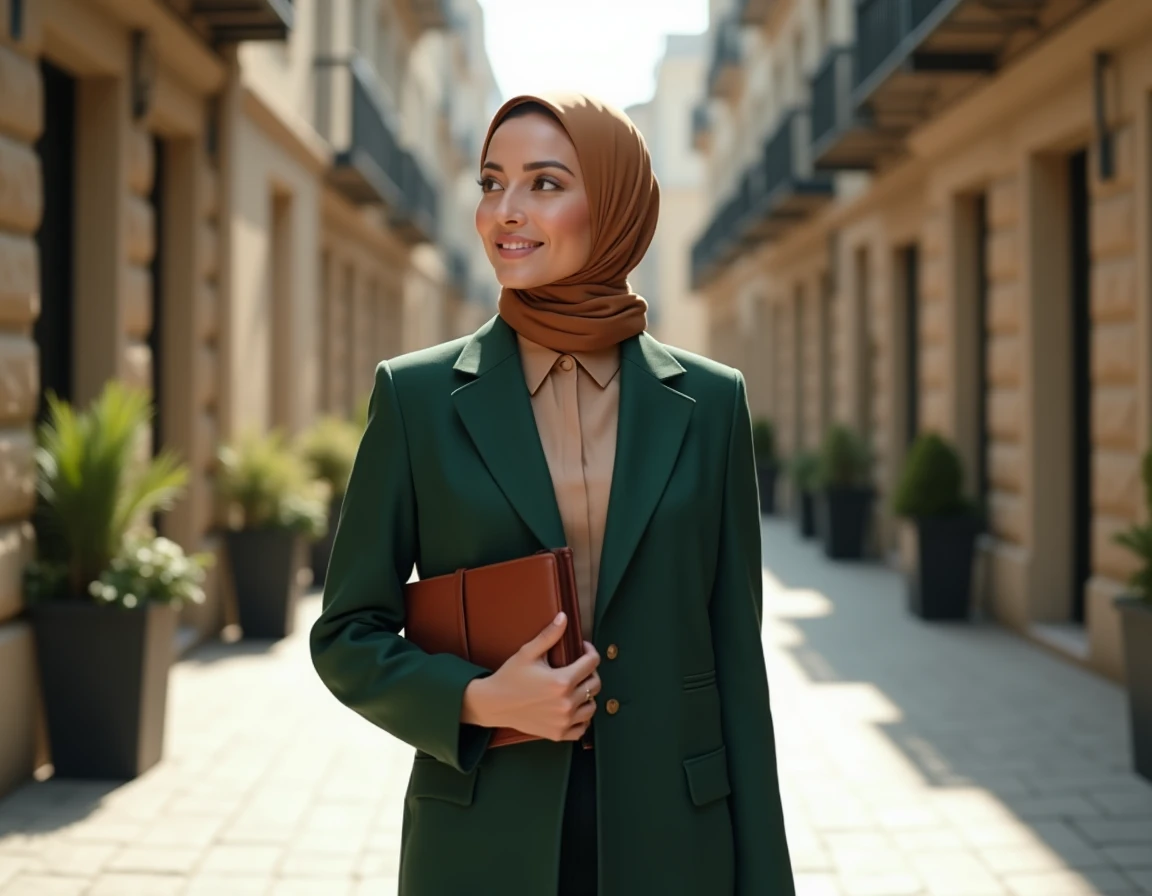
Modest modeling is no longer a vague concept. In recent years, Modest Fashion Weeks have been held in Dubai, Istanbul, and Jakarta. Specialized agencies in Malaysia and Indonesia explicitly recruit hijab-wearing models, with contracts that clearly outline religious boundaries.
These contracts generally include several safeguards:
- No tight clothing or nudity, even partial, during shoots
- No physical contact with men on set (stylists, photographers, other models)
- Clause for visual approval before publication, to avoid any retouching that would distort the modest outfit
- Geographical or media restrictions for dissemination (only women’s press, internal catalogs, etc.)
These professional circuits offer a concrete alternative to traditional agencies. While it is far from Paris runway modeling, these structures allow work within a framework designed to respect Islamic ethics.
The Case of Halima Aden and Its Limits
The journey of Halima Aden remains the most cited reference in this field. An American-Somali model, she has walked for major fashion houses while wearing the hijab. However, she publicly announced her departure from conventional modeling, explaining that she lost control of her image. Photos had been retouched or used in ways incompatible with her beliefs.
Her testimony illustrates a structural problem: even with fame that provides negotiating power, image control remains difficult in traditional circuits. Feedback on this point varies by agency and country, but the risk exists as soon as one steps outside specialized modest fashion circuits.
Modest Modeling in Islam: Practical Criteria Before Getting Started
Before signing anything, several concrete checks are necessary. The goal is not to settle the theological debate in place of a scholar, but to establish the operational criteria that the concerned women can examine.
- Does the contract specify the target audience (female only, mixed, open digital)?
- Is there a clause for visual approval before dissemination, and a withdrawal clause after publication?
- Has the agency previously worked with hijab-wearing models, and can it provide references?
- Do the shooting conditions explicitly exclude physical contact with men and tight clothing?
- Is dissemination limited in time or media, or is the image transferred without restrictions?
A vague contract on these points is a warning sign, regardless of the agency’s commercial discourse.

Consult a Qualified Scholar, Not Just Social Media
TikTok videos and Reddit threads on the subject are multiplying, but they often mix personal opinions with Islamic legal opinions. Viral content does not hold the same value as a reasoned fatwa. For a decision that impacts one’s religious practice and career, consulting an imam or a mufti who understands the realities of the fashion industry remains the most reliable approach.
Modest Clothing and Modeling: A Market in Structuring
The modest clothing sector is now attracting mainstream brands launching hijab or abaya lines. This dynamic creates real opportunities for hijab-wearing models, but it also creates a gray area. A non-specialized brand may use the image of a hijab-wearing model for a “diversity” campaign without adhering to the modesty conditions expected in an Islamic framework.
Differentiating a modest fashion brand from a brand that uses modesty as a marketing argument requires checking its previous campaigns, production teams, and contractual conditions. The khimar or hijab on a poster does not guarantee that the creation process respects the religious principles behind the clothing.
Modest modeling according to Islam is neither entirely forbidden nor automatically permissible. The answer depends on the chosen circuit, the signed contract, the target audience, and the degree of control retained over one’s image. Muslim women considering this path now have specialized structures that did not exist a few years ago, provided they verify each clause before posing in front of a camera.