When preparing for a night in the great outdoors, the first instinct is often to look for a spectacular location. The real starting point should be elsewhere: the regulations of the land, the minimum acceptable level of comfort, and the season. These three parameters alone eliminate half of the options and guide you toward the type of suitable accommodation.
Regulations and access to the land: what determines the choice of nature accommodation
Setting up a tent, a bubble, or a lodge in the wild is not just a matter of a spontaneous decision. The Urban Planning Code requires that camping outside designated areas be approved by the person who has the rights to the land. Specific prohibitions are added in protected sites, along the coast, or near water catchment areas.
In national parks and nature reserves, bivouacking may be regulated by specific hours or limited to certain areas. These restrictions vary by season, especially during periods of fire risk, when prefectural orders can prohibit all activities overnight.
For those who prefer an organized setting, there is now a wide range of accommodation on the Aventures Légendaires site, with options that directly include access to authorized and marked private lands.
A cabin or lodge presented as a lightweight structure is not necessarily exempt from urban planning regulations. The ground area, the duration of installation, and the nature of the land determine the necessary procedures: preliminary declaration, building permit, or simple authorization from the owner. Checking this point before booking avoids surprises upon arrival.
Treehouse or transparent bubble: concrete selection criteria
The two most sought-after formats in France for an unusual stay in nature are the treehouse and the bubble. Their similarity ends at the word “unusual”: in practice, they are chosen for different reasons.
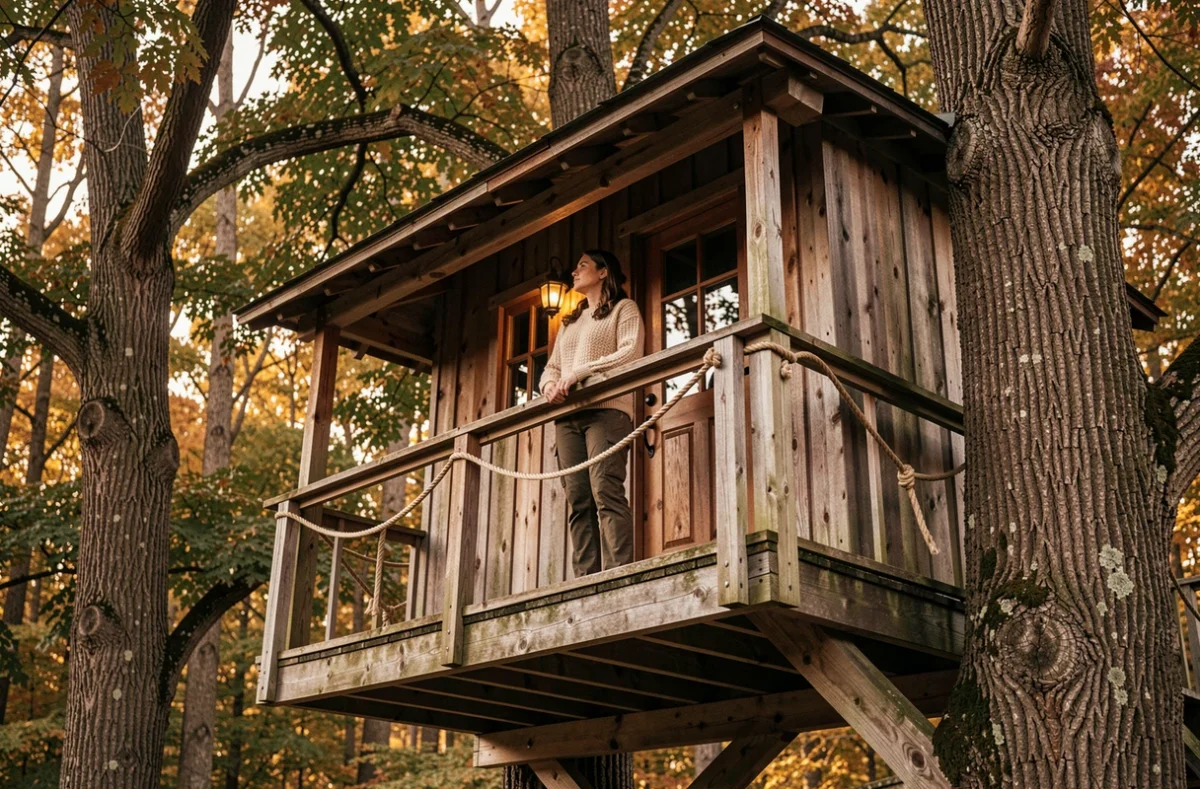
Treehouses: comfort and isolation
A treehouse offers superior sound and visual isolation compared to most other accommodations in nature. The wooden structure, often accessible by a ladder or staircase, effectively protects against wind and rain.
This type of stay is particularly suitable for families with children or couples looking for a cozy retreat in the forest. Some estates offer a Nordic bath on the terrace, adding a pleasant spa aspect without leaving the canopy.
The treehouse remains accessible in autumn and winter, provided that the structure is heated. However, access can become slippery in wet weather, a detail that booking sites rarely mention.
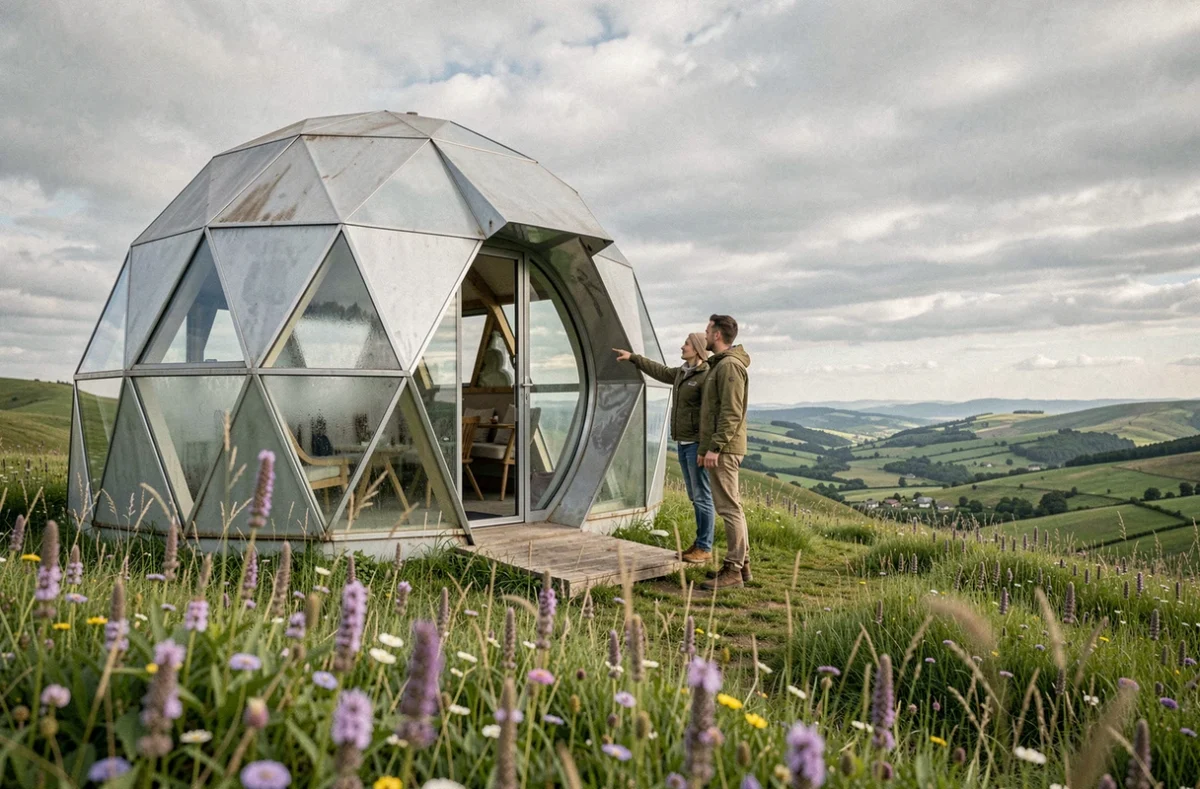
Bubbles and domes: sky observation as the main selling point
The transparent bubble, often inflatable, focuses entirely on the unobstructed view and stargazing. Thermal comfort heavily depends on the technology used by the operator: ventilation, insulation, supplementary heating.
In summer, the indoor temperature can rise quickly from sunrise. Choosing a bubble set up under forest cover rather than in an open area mitigates this problem and preserves privacy. In winter, without an efficient heating system, the night becomes uncomfortable below five degrees.
Unusual accommodations for families: adapting the adventure for children
Going on a family trip to an atypical accommodation requires anticipating constraints that adults alone may overlook. Physical access to the lodging is the first filter.
- Treehouses accessible by ladder are not recommended for children under six, unless an alternative (staircase, walkway) exists on the estate.
- Ground-level bubbles and domes are suitable for all ages, but the lack of partitions may pose a sleep issue if the child needs darkness.
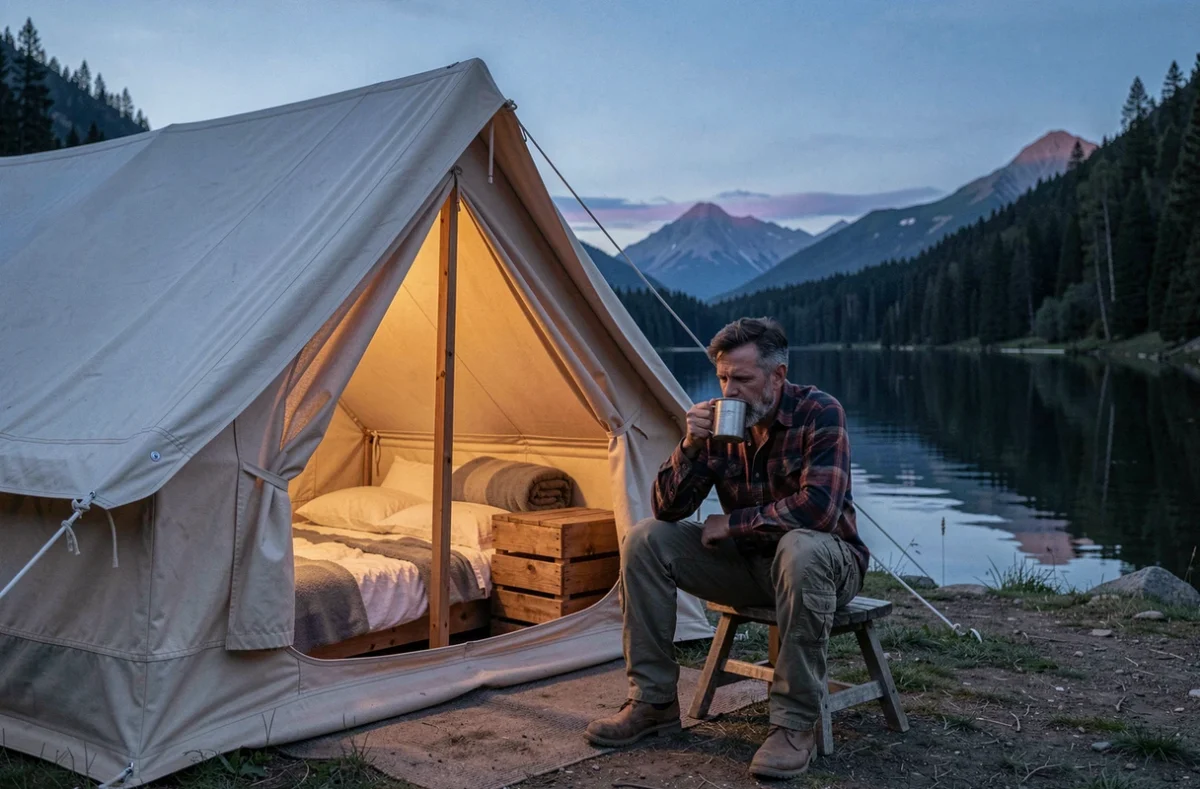
- Tipis, yurts, and lodge tents offer an interesting compromise: generous floor space, a “base camp” atmosphere that children enjoy, and setup on flat ground without the risk of falling.
- Caravans combine mobility and a cozy feel, with often enough space for a family of four.
Beyond the lodging, the presence of nature activities on the estate (marked trails, farm animals, water points) transforms a simple stay into a true adventure for the youngest.
Preparing for an unusual night in nature: the terrain checklist
The material preparation for a night in unusual accommodation is often underestimated. Unlike a traditional hotel, the level of equipment provided varies greatly from one estate to another.
- Check if bedding is included or if you need to bring sheets and blankets, especially in cabins and yurts.
- Inquire about access to running water and sanitation: some accommodations deep in the forest only have dry toilets and a water point several minutes’ walk away.
- Plan to bring a headlamp and closed shoes for nighttime movements on unlit terrain.
Mobile network coverage is often nonexistent or very weak in the most isolated areas. For families, downloading maps and practical information in advance avoids relying on a connection on-site.
The duration of the stay also matters. One night is enough to discover a format (bubble, cabin, tipi). Two nights allow you to enjoy the estate and its surroundings without the pressure of departure. Beyond three nights in the same unusual accommodation, the novelty effect fades, and it is beneficial to combine several types of lodging during the same nature stay.
The choice of accommodation in nature depends less on the aesthetics of the photos than on the intersection of local regulations, actual thermal comfort, and the profile of the travelers. Starting with these concrete criteria, rather than the catalog of images, remains the best way to turn an unusual night into a truly memorable experience.